
Use a blank page to find out what you can actually remember
A practical blurting routine: choose a small topic, close the source, explain it from memory, check the gaps, and test again later.
What is the blurting method?
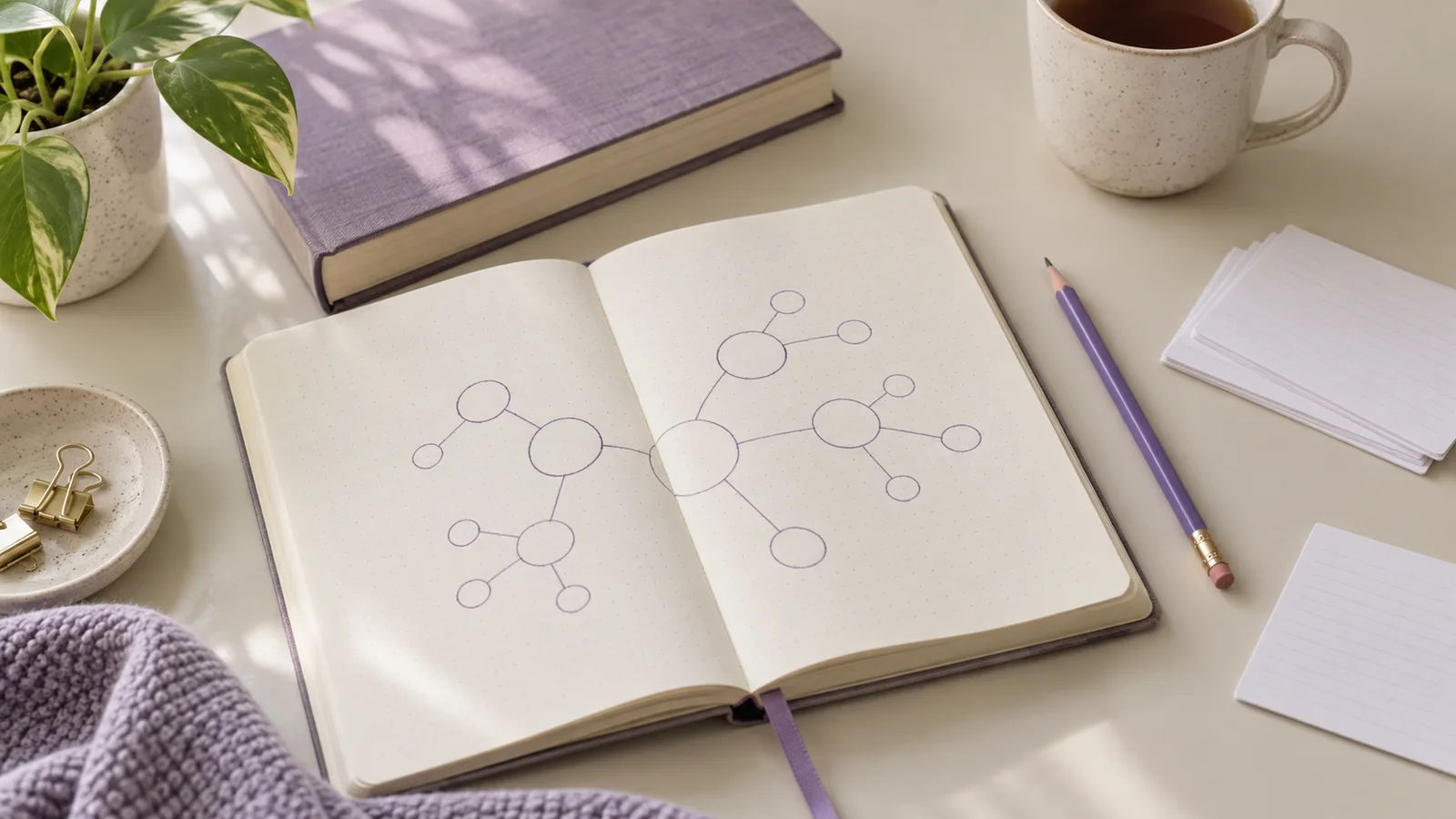
Blurting means putting your notes away and writing or saying what you remember about a bounded topic. You then compare your attempt with the source. Birmingham City University lists it as a form of active recall. It is a useful way to reveal gaps; filling a page is not itself a measure of mastery.
The routine below is a suggested starting point, not a scientifically established timing formula. Adjust it to the difficulty of your material. You need a source you understand reasonably well, a blank page, and a way to distinguish your original answer from corrections.
Try this 15-minute routine
Spend two minutes choosing one learning objective and checking its scope. Close the source. For five minutes, explain the topic from memory with sentences, a diagram, or a sequence of steps. If you get stuck, leave a gap instead of peeking.
Use the next five minutes to compare your attempt with the source. Mark accurate ideas, missing ideas, and incorrect ideas separately. Spend the final three minutes writing two or three questions about the gaps. Return to those questions in a later session; do not spend the whole afternoon redrawing the same page.
Worked example: diffusion and osmosis
Suppose your objective is to distinguish diffusion from osmosis. Your first attempt says both involve movement, but leaves out what moves and the conditions involved. Compare that answer with your course definition and add the missing distinctions in another colour.
Create prompts such as: “What moves in osmosis, and what membrane is required?” and “How is diffusion different?” Then explain an example without looking. Keep the wording consistent with your course, especially its treatment of concentration and water potential. This example illustrates the checking process; your textbook remains the authority.
Correction: diffusion is net particle movement down a concentration gradient; osmosis specifically concerns water crossing a selectively permeable membrane.
Choose blurting, flashcards, or practice problems for the job
Use a blank page when you need to reconstruct an explanation or see relationships across a topic. Use a flashcard when one specific distinction keeps disappearing. Use actual problems, essays, or diagrams when the assessment requires producing those things.
A neat concept map cannot show whether you can solve an unfamiliar calculation. After your recall attempt, include at least one task that resembles the assessment. If the page is nearly empty, return to a smaller explanation or worked example before testing again.
Use AI after your attempt
In Brainote, use the relevant note to draft follow-up questions or ask for an explanation of a missing concept. Compare the explanation with the original material before adding it to your study set. Do the recall attempt before opening generated answers.
Keep a short record: topic, missed distinction, correction, and next review. A better next attempt should explain the repaired idea without a cue. More pages and more generated cards are not the goal.
Sources and further reading
- 1.Passive Transport (OpenStax Biology 2e)
- 2.What is active recall? (Birmingham City University)
- 3.Exam Revision: Memory and Recall (York St John University)
FAQ
Is blurting different from active recall?
It is one way to practise active recall. The blank page gives fewer cues than a flashcard, which makes it useful for checking a whole explanation.
How long should a blurting session last?
Start with one small topic and a short timed attempt. The 15-minute routine here is a practical suggestion; shorten or extend it to leave enough time for checking.
Can I type or speak instead of writing?
Yes. Keep the source hidden and preserve a record you can check. Choose a response format that also prepares you for your assessment.
Should I repeat the page until it is perfect?
Repair misunderstandings first, then test again after a delay. Immediate copying of the corrected page can make the task feel easier without showing durable recall.
The Blurting Method: A Practical Active Recall Study Routine
Learn the blurting study method with a timed routine, a worked biology example, a marking checklist, and ways to turn memory gaps into useful flashcards.