
Practise choosing the method, not just repeating it
Mix related problem types once you understand their basics, then explain why each question calls for a particular approach.
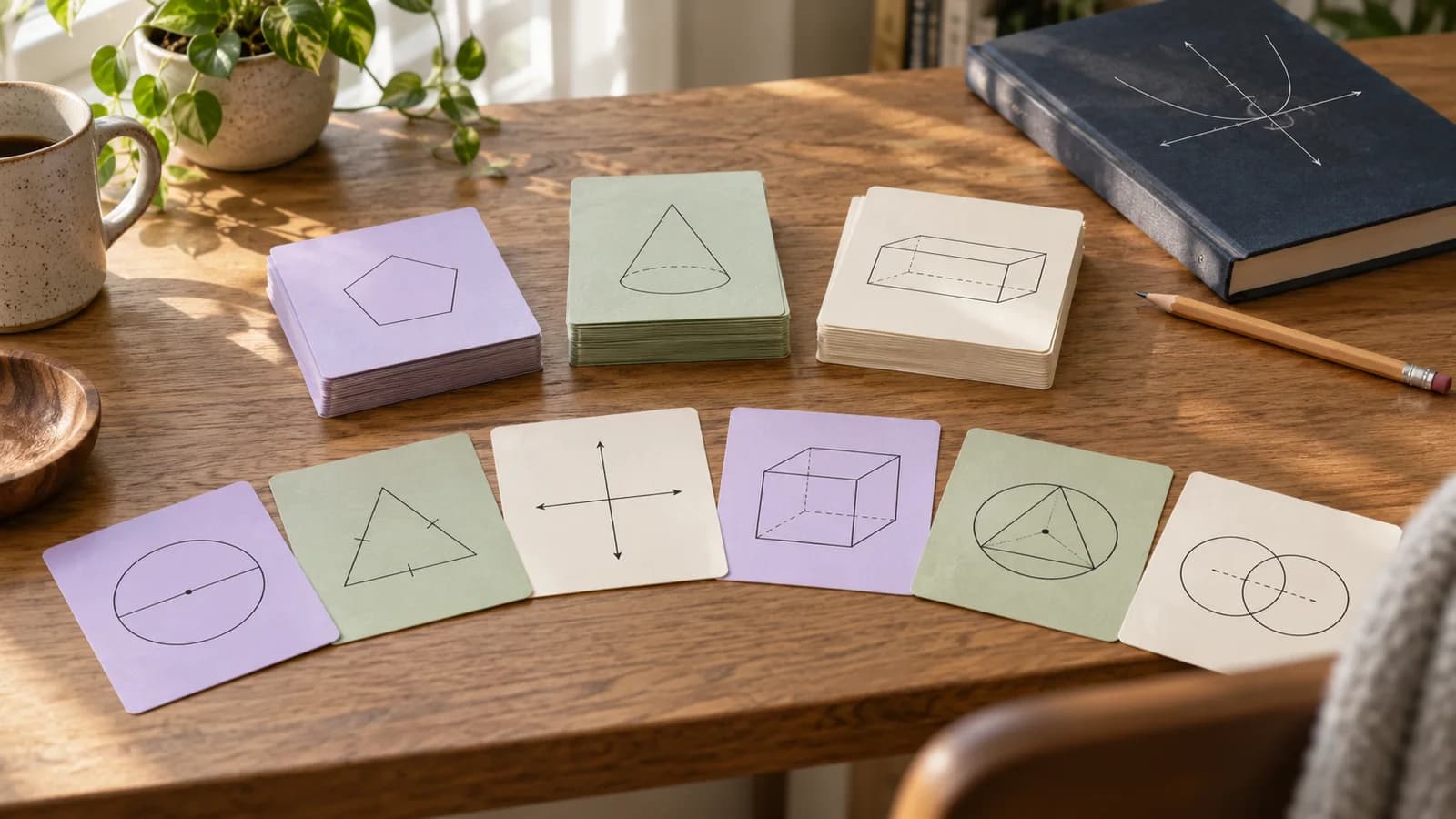
Interleaving versus blocked practice
Blocked practice groups similar tasks together: A, A, A, then B, B, B. Interleaving mixes them: A, B, C, A, C, B. The important change is that the next question does not announce which method you should use.
A randomized classroom study by Rohrer and colleagues examined interleaved mathematics practice. Its results support mixing problem types in that setting; they do not establish one ideal schedule for every subject. Treat the plan below as a practical adaptation.
First learn enough to attempt each type
If every problem is unfamiliar, mixing everything can hide the real issue: you have not learned the starting methods yet. Study an explanation, work through an example, and attempt a small number of similar questions before combining types.
Choose topics that require a meaningful distinction. For statistics, these might be questions about the mean, median, and interpreting spread. For a theory course, mix cases that could be explained by related concepts. Randomly switching between unrelated textbooks is not the objective.
Build a small mixed set
Here is a suggested session: spend five minutes checking the methods, fifteen minutes answering six mixed questions without method labels, and ten minutes checking solutions. Change these timings to suit the work; they are not a validated protocol.
Before each answer, write the method you chose and the feature of the question that justified it. For a geometry example, mix area and perimeter questions. If you calculate area when the problem asks for a boundary length, log that as a method-selection error even if your arithmetic was accurate.
For a rectangle measuring 5 cm by 3 cm, the area is 15 cm² and the perimeter is 16 cm. The request for a surface or a boundary decides which calculation you need.
Separate selection errors from execution errors
After marking, classify each miss: wrong method, missing knowledge, calculation error, or misread question. Repair the specific cause. If you chose the wrong method, compare two examples and identify the cue that separates them. If you chose correctly but made an arithmetic slip, practise that step.
At a later review, change the order and include a fresh example. A perfect score on an identical sequence may reflect memory for the sequence. Keep the topic labels and answers hidden until you finish the attempt.
Combine mixed practice with a manageable review loop
Interleaving concerns what you mix; spacing concerns when you return. You can use both by revisiting a mixed set on another day. Do not switch tasks so frequently that you never complete an explanation or solution.
Brainote can help draft questions from your notes. Check that they genuinely require different decisions and verify the answers against the source. If a generated quiz groups every question by topic, build your mixed sequence separately rather than assuming the app automatically interleaves it.
Sources and further reading
- 1.An Efficacy Study of Interleaved Mathematics Practice (Institute of Education Sciences)
- 2.A Randomized Controlled Trial of Interleaved Mathematics Practice (Rohrer et al., Journal of Educational Psychology)
- 3.Learn To Study Using…Interleaving (The Learning Scientists)
FAQ
Is interleaving the same as multitasking?
No. Complete one problem or meaningful explanation before moving to another. Keep distractions outside the study session.
When should I stop blocked practice?
Try mixing when you can attempt the basic types with some independence. Return briefly to a worked example when a particular method is missing.
Does interleaving work for every subject?
Evidence depends on the material and task. It is especially useful to consider when you must distinguish related categories or select a problem-solving method.
How many topics should I mix?
Begin with two or three related types you already recognise. Expand only when you can check mistakes and explain your choices.
Interleaving Study Practice: How to Mix Topics With Purpose
Learn interleaving versus blocked practice, when to mix topics, and how to build a mixed question set that trains you to choose the right method.